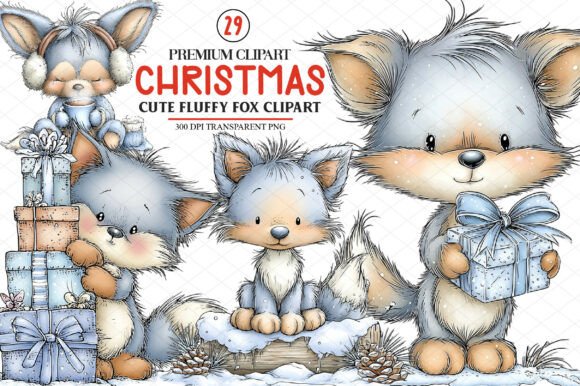
A Festive Fox Design for Holiday Crafting
When you’re sourcing artwork for embroidery, especially for a holiday season project, you’re looking for something that strikes the right chord. It needs to feel festive without being generic, cute without being childish, and versatile enough to translate well into stitches across different products. Opening the zip file for the Cute Christmas Fluffy Fox Clipart collection, my first impression was that this set has a very specific, warm personality. It’s not just another snowflake or reindeer; it’s a character. The 29 PNG files offer a lot of variation, which is a huge plus for a designer thinking about product lines.
The Mood and Crafting Potential
The design’s strength lies in its theme. A fluffy fox wrapped in holiday elements instantly creates a cozy, whimsical, and slightly nostalgic mood. This isn’t a loud, flashy Christmas graphic; it’s softer. That visual personality makes it perfect for projects aimed at gift-givers looking for something unique, or for small businesses wanting to offer a holiday product that stands out from the usual motifs. For embroidery, this translates beautifully into items like pillow covers, tea towels, or nursery decor—anything where you want to evoke a feeling of warmth and gentle celebration.
Imagine you’re preparing a custom embroidered tote bag as a personalized holiday gift. You want it to feel special and handmade, not mass-produced. Using one of these fox illustrations as the focal point gives you that story. The recipient isn’t just getting a bag; they’re getting a little narrative of a festive fox, which adds perceived value and charm. For an Etsy seller, that storytelling element can be a key selling point in your listing description.
Where This Fox Shines in Stitched Form
In practical terms, this collection of graphics lends itself to a wide range of embroidery projects. The level of detail in the PNGs suggests it can handle both simpler outlines and more filled areas, depending on which file you choose to digitize or trace.
For custom apparel like sweatshirts or t-shirts, a medium-sized fox with its scarf and hat would make a great chest or sleeve design. The fluffy texture implied in the artwork can be cleverly interpreted through stitch choice—perhaps using a softer fill stitch for the body and crisp satin stitches for the accessories. On baby clothes or blankets, a smaller, simpler version would be adorable and safe, avoiding overly dense stitch areas that could be uncomfortable.
Embroidered patches are another fantastic application. A boutique could use these to create branded holiday patches for caps or aprons. The design’s clear shapes and defined elements mean it will retain recognition even when stitched down to a smaller size. For home decor like pillow covers or kitchen towels, you have more room to play, potentially using a larger, more detailed version to make a statement piece.
The fact that these are high-resolution PNG files is a boon for creating printable mockups for your online store. You can quickly show customers how the design might look on a product before you even stitch it, which builds trust and engagement. For a digital product seller, these graphics themselves become assets for other crafters, though always remember to confirm the licensing terms for any commercial use of the finished embroidery files you create from them.
Considerations for Successful Stitching
While the artwork is charming, a professional designer knows that not every graphic translates perfectly to every fabric or technique. Here’s where a realistic evaluation comes in.
The design’s appeal depends on clarity. On dark fabrics, you’ll need to be strategic with thread color choices to maintain that cute, bright feeling. A test on scrap fabric with your chosen palette is essential. Some of the more detailed versions, with smaller elements like berry accents or tiny patterns on the scarf, might require careful digitization to ensure stitch clarity. On stretchy fabrics or textured fabrics like some towels, you’ll need the right stabilizer to keep those clean lines.
Small hoop sizes and applications on curved surfaces like caps demand simplification. You might need to select a less detailed fox from the set or simplify an outline yourself to ensure the design doesn’t become a muddy cluster of stitches. The “fluffy” aspect, while visually appealing, needs to be interpreted with stitch density in mind. Too dense a fill stitch on a thin t-shirt could make the fabric stiff; a running stitch outline might be better for a lightweight garment.
For products that need frequent washing, like baby items or kitchen linens, you’ll want to ensure your embroidery file is robust—secure stitches and thread that can hold up. The design itself, being a solid graphic, shouldn’t be a problem, but your execution needs to match the product’s use.
Building Your Product’s Value with This Design
Using a design like this isn’ just about the stitch; it’s about the final product’s story and marketability. For a creative entrepreneur, this fox can help with brand consistency if you develop a whole holiday line around it—foxes on totes, foxes on pillows, foxes on ornaments. It creates a recognizable theme for your shop.
The giftability is high. A handmade embroidered item featuring this fox feels thoughtful and themed, perfect for holiday markets or as a personalized gift. It elevates the item from a simple craft to a designed product. For customer trust and professionalism, showing that you use well-composed, original artwork (even if sourced from a clipart collection like this) in your projects demonstrates an eye for design, which buyers appreciate.
Your handmade presentation benefits immensely. A generic design can make a product feel cheap; a unique, character-driven design like this makes it feel special and intentionally crafted. This directly impacts buyer engagement on your Etsy listing or at a craft fair—people are drawn to stories and characters.
Practical Notes Before You Hoop
Before you commit this fox to a client’s sweatshirt or a batch of tote bags, do your homework. Since the provided files are PNGs and not SVG, you’ll be working with raster images for your digitizing. Ensure you’re using a clear, high-quality version from the set for your embroidery file creation.
- Always test the design on scrap fabric first, in the colors and fabric type you plan to use.
- Check thread color contrast against your background fabric, especially for dark materials.
- Review stitch density in your digitized file—adapt it for the final product’s fabric and use.
- Confirm your hoop size can accommodate the design size you want without losing detail.
- Inspect small details in the artwork before digitizing; decide if they need to be emphasized or simplified for stitching.
- It’s wise to test it in black and white mockups to see how the composition holds up without color.
- Compare light and dark fabric backgrounds in your planning to ensure versatility.
- Use the proper stabilizer for your chosen project; this design’s success hinges on clean stitches.
- Finally, check whether the design works for both personal and commercial projects according to its license. The description doesn’t specify, so verifying this is crucial before selling finished items.
Embroidery is a translation from image to thread. The Cute Christmas Fluffy Fox Clipart provides a lovely, versatile source image. With practical attention to how it stitches out on real products—from baby blankets to boutique aprons—it can become the heart of a truly charming holiday embroidery project that delights both you as the maker and your eventual customer.